Building your personal and professional abilities can change the shape of your life, though usually not in one dramatic moment. It tends to happen more quietly than that. A better conversation at work. More confidence in a meeting. Less hesitation when a new task lands on your desk. Most people do want to improve, but the problem is rarely desire alone. More often, they lack a method that feels clear, realistic, and sustainable.

That is where a focused approach helps. When you choose a few areas to work on, rather than vaguely deciding to “get better,” progress becomes easier to see and easier to maintain. This guide on how to improve self skills lays out a practical way to strengthen your skills without turning self-improvement into a full-time project.
Identify Your Current Skill Level
Before you try to improve, it helps to know what you are actually working with. That sounds obvious, but people often skip it. They assume they know their strengths, guess at their weak spots, and then wonder why their effort feels scattered. A more honest starting point is useful.
Begin with a simple review of your current abilities. Write down the tasks you handle with little strain and the ones that slow you down, frustrate you, or leave you relying heavily on others. You are not trying to produce a perfect self-analysis here. You are trying to get close enough to reality that your next steps make sense. Even a rough inventory can reveal patterns. Maybe you communicate well one-on-one but avoid group settings. Maybe you manage deadlines capably but struggle when priorities shift midweek.
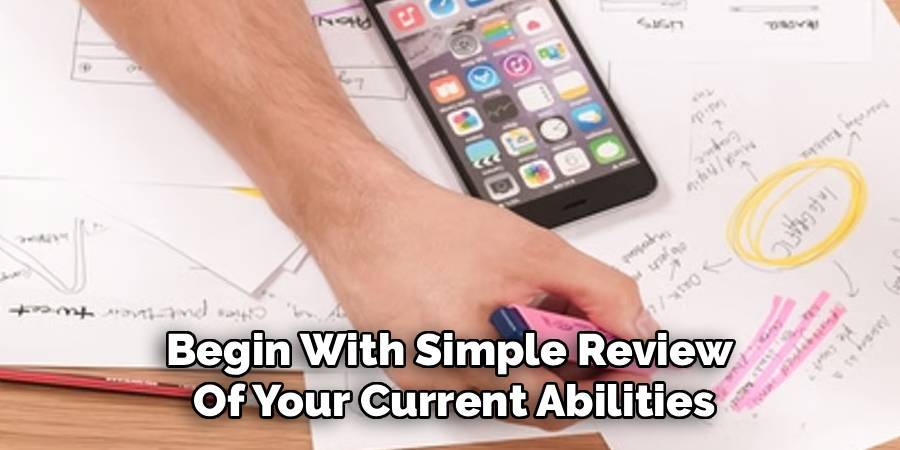
Your own view, however, is only part of the picture. Ask a colleague, manager, friend, or mentor for direct feedback if you can. People around us sometimes notice habits we barely register ourselves. They may also point out strengths we dismiss because they come naturally. Put those perspectives beside your own. The overlap often tells you where to begin.
7 Simple Step-By-Step Guidelines on How to Improve Self Skills
Step 1: Set Clear and Measurable Goals
A skill-building plan usually falls apart when the goal is too vague. “I want to get better at speaking” sounds admirable, but it does not give you anything concrete to work toward. Better to name the outcome more precisely: deliver a ten-minute team update by the end of the month without reading from a script, for instance. That kind of goal gives direction. It also makes progress easier to judge.
Smaller milestones matter more than people sometimes admit. Large ambitions can be energizing at first, then oddly paralyzing. Breaking them into shorter stages changes the psychology of the task. Instead of aiming at some distant version of yourself, you focus on the next move. Finish one presentation outline. Practice once with a timer. Speak without notes for three minutes, then five, then ten. A timeline helps, too, not because life obeys neat schedules, but because deadlines force decisions.
Step 2: Create a Daily Learning Habit
Skill development tends to reward repetition more than intensity. An hour a day, or even twenty focused minutes, will often do more than one exhausted weekend binge followed by five days of nothing. The slow build matters. It may feel unimpressive in the moment, but that is often how real progress works.
Try attaching learning to an existing routine. Read a short article with your morning coffee. Listen to a relevant podcast during your commute. Spend fifteen minutes after lunch reviewing notes or practicing one small technique. The best habit is not the most ambitious one. It is the one you can repeat without a constant internal argument.
A little preparation can reduce friction. Keep your reading list visible. Save the course link where you will actually see it. Leave your notebook open on the desk instead of tucked in a drawer. These details seem minor, yet they often determine whether learning becomes regular or remains something you keep meaning to do.
Step 3: Seek Out Constructive Feedback
There are limits to what you can diagnose on your own. We all have blind spots. Some are harmless. Others quietly slow our progress for months. Feedback, when it is specific and well-timed, can shorten that cycle.
The key is to ask better questions. “How did I do?” usually produces polite, vague answers. Ask instead, “Did I explain the main point clearly?” or “Where did I lose the audience?” or “Was my response during the Q&A too long?” Specific questions invite useful responses. General ones often invite reassurance.
Receiving criticism well is its own discipline. Not easy. Even helpful feedback can sting, especially when it confirms something you suspected already. Still, if you can listen without rushing to defend yourself, you gain information that self-study alone may never provide. Not every comment deserves equal weight, of course. Some advice reflects preference rather than principle. But careful evaluation of outside input can sharpen your judgment and improve your performance faster than guesswork.
Step 4: Find a Mentor or Coach
Trying to improve on your own can work, but it is often slower and more confusing than people expect. At some point, having guidance from someone more experienced may save time and unnecessary frustration. A strong mentor does not simply cheer you on. They help you see the terrain more clearly.
This person might suggest better resources, flag common mistakes, or tell you, gently but plainly, when you are focusing on the wrong thing. That kind of guidance can be especially useful if you are learning in a field with unspoken expectations, such as leadership, communication, or technical work, where practical judgment matters as much as textbook knowledge.

That said, mentorship is not passive. You need to show up prepared. Bring questions. Describe the obstacle clearly. Report back on what you tried and what happened. People are more willing to invest time when they can see that their advice is being used thoughtfully rather than collected like inspirational wallpaper.
Step 5: Practice Consistently Over Time
Reading about a skill and performing it are related, but they are not the same. This is where many learners stall. They consume information, feel productive, and then discover—often at an inconvenient moment—that understanding a concept is not the same as being able to use it under pressure.
So practice has to become concrete. If you are learning a software tool, build something with it. If you want to write better, write regularly and revise what you wrote. If the goal is public speaking, speak aloud to an actual audience, even a small one. Real use exposes hesitation, confusion, timing issues, and weak assumptions in a way theory rarely does.
Early attempts may feel clumsy. That is normal, and perhaps unavoidable. Skill acquisition often looks messy before it looks competent. What matters is repeated exposure. Over time, actions that once required conscious effort begin to feel more natural. Not effortless, exactly—but steadier.
Step 6: Embrace New Challenges
Once you have a basic grasp of a skill, staying in safe conditions can become its own kind of trap. You keep doing what you already know how to do, and progress flattens. To move forward, you usually need some degree of stretch.
That could mean volunteering for a project that asks more of you than usual. It could mean leading part of a meeting, taking on a task outside your standard role, or working with a new group where your usual habits no longer carry you. Slight discomfort is often a sign that learning is still happening.
There is a balance here. Constant overwhelm is not useful, and not every intimidating opportunity is wise. Still, selective challenge builds both competence and composure. When you work through a difficult assignment, especially one you were not entirely sure you could handle, you develop more than the skill itself. You also build evidence that you can function in uncertainty.
Step 7: Reflect on Your Progress
Reflection sounds soft compared with action, but it serves a practical purpose. Without it, people often repeat the same effort without noticing what is helping and what is wasting time. Looking back gives the learning process shape.
Set aside time every week or month to review what you practiced, what improved, and where you still feel stuck. Keep notes if that helps. A journal, a spreadsheet, a document on your laptop—any format is fine if you actually use it. Over time, those records can reveal something important: progress is often easier to see in retrospect than in real time.
This is also the moment to acknowledge what is working. Not in a performative, self-congratulatory way. Just honestly. If you handled a difficult conversation better than you would have six months ago, that counts. If you are more organized, more articulate, less avoidant, that counts too. Small gains accumulate. Reflection helps ensure they do not go unnoticed. Following these steps on how to improve self skills can lead to long-term personal growth and overall improvement in various aspects of life.
Avoid Common Mistakes
One common error is trying to improve everything at once. It feels productive, even ambitious, but it usually scatters attention. Most people make better progress when they focus on one high-value skill at a time, or at least one primary area with a secondary one in the background.
Comparison causes trouble, too. Measuring your early efforts against someone else’s polished performance rarely leads anywhere useful. You are not seeing their beginning. You are seeing the visible result of time, repetition, failure, and revision. Comparison can sometimes motivate, but just as often it distorts judgment and drains energy. A better standard is your own previous level of performance.
Stay Patient and Consistent
Meaningful improvement tends to take longer than motivation predicts. There will probably be weeks when you feel stuck, or worse, when it seems as though all your effort has produced very little. That does not always mean the process has failed. Sometimes it simply means growth is less dramatic than we want it to be.
Patience matters here, though patience should not be confused with passivity. Keep showing up. Keep practicing. Return to the habits you set when enthusiasm was higher. In many cases, long-term consistency matters more than occasional bursts of determination. Mastery, if that word applies at all, is usually built in this slower way.
Frequently Asked Questions
Q1: How Long Does It Take To Improve Self Skills?
A1: It depends on the skill, the depth of improvement you want, and the regularity of your practice. Some changes become noticeable within days or weeks, especially if the skill is narrow and the feedback is immediate. More substantial improvement often takes months. In some cases, especially with communication, leadership, or analytical thinking, development may continue over years. Daily progress can seem small, but it tends to compound.
Q2: What Are The Most Important Skills To Learn First?
A2: Foundational skills usually offer the widest payoff. Communication is one. Time management is another, though it may be more accurate to call it attention management in practice. Critical thinking also matters because it affects how you interpret problems, information, and other people’s claims. Strengthening these areas often makes later learning easier, whether you are moving into a technical field, a management role, or simply trying to work with more confidence.
Q3: How Do I Stay Motivated When Learning Gets Hard?
A3: Motivation rises and falls. That is normal, and it is one reason habits tend to matter more than mood. On difficult days, it may help to return to the reason you started. It can also help to reduce the task size. Instead of trying to solve the whole problem, complete one small piece of it. Progress often resumes when the work feels manageable again. Discipline may sound less exciting than inspiration, but it is usually more dependable.
Take Charge of Your Personal Growth Journey
Improving your self-skills is one of the more useful long-term investments you can make. Not because it guarantees a perfect outcome, and certainly not because growth follows a neat upward line, but because it gradually expands what you can handle, contribute, and attempt. That matters at work. It matters in life more broadly as well.
Start with one area. Make the goal specific. Build a routine you can sustain, ask for honest feedback, practice more than you theorize, and take on challenges that stretch you without breaking your momentum. If you keep at it, the results may arrive less dramatically than you expect—but they do tend to arrive. Thanks for reading this guide on how to improve self skills.

About
Joe Herman is a distinguished figure in the world of personal development, with a decade of expertise creating innovative and sustainable self-improvement frameworks. His professional focus lies in merging cognitive behavioral strategies with modern productivity techniques, fostering habits that are both practical and mentally sustainable. As the lead author of selfvity, Joe Herman delves into the art and science of human potential, inspiring individuals and industry professionals alike to optimize their daily lives.
Education
Stanford University
(Stanford, California) Associate Degree in Behavioral Psychology — Focus on habit formation, cognitive restructuring, and peak performance. Gained hands-on experience with psychological assessment tools and data-driven behavioral modification.
University of Pennsylvania
(Philadelphia, Pennsylvania) Bachelor’s in Positive Psychology and Human Potential (Honors) — Specialized in the science of well-being with a focus on blending psychological theory with actionable growth techniques. Participated in extensive research projects, working with leading wellness consultants to gain real-world insights into human motivation.
Publications and Impact
In selfvity, Joe Herman shares his insights on internal growth processes, mental material, and strategies for efficient lifestyle design. His writing bridges the gap between scientific research and everyday application, making it a must-read for both individuals seeking personal clarity and seasoned professionals looking to refine their mental edge.