Welcome to this comprehensive guide on identifying yourself. Whether you are navigating complex administrative requirements to establish your legal identity or engaging in the psychological process of personal self-discovery, understanding who you are is fundamental to your success.
Establishing a clear identity allows you to participate fully in society, access essential services, and build a strong foundation for your personal and professional life.

This guide on how to identify yourself blends the practical, legal steps of identification with the psychological importance of knowing yourself, offering a complete roadmap to establishing your identity.
Benefits?
Properly identifying yourself provides immense value across multiple areas of your life. On an administrative level, it grants you access to banking, healthcare, employment, and government benefits. You cannot travel, sign a lease, or purchase property without verified legal identification. Psychologically, understanding your personal identity fosters resilience, self-esteem, and clear boundaries. When you know who you are and have the documents to prove it, you navigate the world with confidence and security.
What Will You Need?
To complete the identification process, you will need a combination of physical documents and personal reflection tools:
- An original or certified copy of your birth certificate.
- A government-issued photo ID (driver’s license or passport).
- Your Social Security card or national insurance number.
- Two recent utility bills or bank statements to prove residency.
- A dedicated journal or document for psychological self-assessment and value tracking.
- A secure fireproof safe to store your physical documents.
10 Easy Steps on How to Identify Yourself
Step 1: Secure Your Foundational Documents
The first step in establishing your legal identity requires securing your primary foundational documents. Your birth certificate serves as the absolute baseline for all other identification requests. If you do not have an original or a certified copy, you must contact the vital records office in the county or state where you were born to request a replacement. This document proves your age, citizenship, and parentage. Keep this document in a secure, fireproof location, as you will need it periodically throughout your life to apply for passports, government benefits, and marriage licenses. Never carry this document in your wallet.

Step 2: Obtain a Government Identification Number
Once you have your foundational documents, you must secure your national identification number, such as a Social Security Number (SSN) in the United States. This number is essential for taxation, employment, and building a credit history. If you have lost your card, you must apply for a replacement through the appropriate government administration office. This nine-digit number essentially tracks your economic and civic lifespan. Because it is so critical, you must guard it fiercely to prevent identity theft. Only provide this number to verified employers, financial institutions, and government agencies when absolutely required by law.
Step 3: Acquire a Primary Photographic ID
A primary photographic identification card allows you to prove who you are during everyday transactions. You must visit your local department of motor vehicles or regional identification office to apply for a driver’s license or a state identification card. You will typically need to present your birth certificate, your social security card, and proof of your physical address. Make sure the photograph clearly represents your current appearance. This card will be requested when you board domestic flights, open bank accounts, or purchase age-restricted items. Always check the expiration date and renew it promptly to maintain your active legal status.

Step 4: Establish Verifiable Proof of Residency
Your identity is closely tied to your physical location. Establishing proof of residency verifies where you live and qualifies you for local elections, state benefits, and resident tuition rates. To build this proof, you must have official mail sent to your physical address in your name. Utility bills, lease agreements, mortgage statements, and bank statements are the most commonly accepted forms of residency proof. Collect at least two different types of these documents and keep them updated. Whenever you move, immediately update your address with the post office, your bank, and the department of motor vehicles.
Step 5: Build a Financial Identity
Your financial identity is just as important as your physical identity in the modern economy. You must open a checking or savings account at a reputable financial institution to begin establishing a financial footprint. Over time, you should apply for a basic credit card or a secured loan to start building a credit history. Your credit score acts as a numerical representation of your financial reliability. Landlords, employers, and lenders will check this profile to determine your trustworthiness. Monitor your credit reports annually to ensure no fraudulent accounts have been opened in your name.
Step 6: Secure Your International Identity
If you plan to travel across national borders, you must establish an international identity by obtaining a passport. A passport is the ultimate form of identification, combining your citizenship status, vital records, and photographic identity into one globally recognized document. The application process requires strict verification, including passport photos that meet specific dimensional and lighting requirements. Because processing times can take several months, you should apply well in advance of any planned travel. Keep your passport in a secure location and consider making a digital photocopy to store safely in case the original is lost abroad.
Step 7: Conduct a Psychological Self-Assessment
Beyond paperwork, you must understand your internal identity. Conduct a psychological self-assessment by taking time to reflect on your personality traits, strengths, and weaknesses. Understanding how you process information, react to stress, and interact with others helps you navigate your personal and professional relationships more effectively. You might utilize established frameworks or simply keep a daily journal to track your emotional responses. This psychological awareness builds emotional intelligence. When you understand your mental framework, you project a much stronger, more authentic version of yourself to the world, making your identity truly complete.
Step 8: Define Your Core Values and Beliefs
Your core values form the psychological anchor of your identity. Take the time to identify what matters most to you in life, whether that is integrity, family, ambition, creativity, or independence. Write these values down and evaluate how your current lifestyle aligns with them. When you make decisions based on defined principles rather than fleeting emotions, you establish a consistent personal brand. People will recognize you not just by your face or your name, but by the character you consistently demonstrate. A well-defined set of values gives your identity substance, purpose, and clear direction.
Step 9: Curate Your Digital Identity
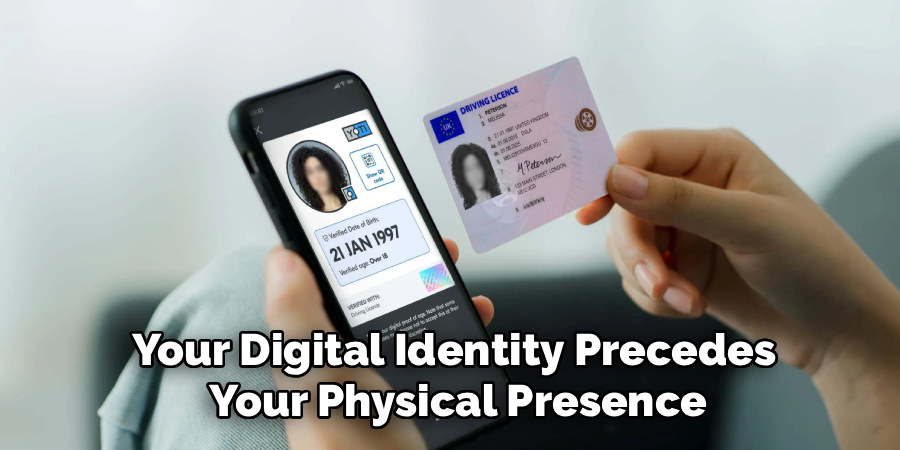
In our connected era, your digital identity precedes your physical presence. You must take control of how you appear online by auditing your social media profiles and professional networks. Ensure your name, employment history, and contact information remain consistent across all professional platforms like LinkedIn. Remove or privatize any content that does not align with the personal and professional identity you want to project. Use strong, unique passwords and enable two-factor authentication on all critical accounts to prevent malicious actors from hijacking your digital persona. Your online reputation is permanent, so manage it with intentional care.
Step 10: Protect and Maintain Your Identity
The final step in identifying yourself is fiercely protecting the identity you have built. Identity theft can destroy your financial standing and entangle you in legal issues that take years to resolve. Never carry your Social Security card in your wallet, and shred all documents containing sensitive personal information before throwing them away. Regularly review your bank statements and credit reports for unauthorized activity. Keep your physical documents in a fireproof safe. Identity is not a one-time achievement but a lifelong asset that requires ongoing maintenance, vigilance, and careful protection to remain secure and valid.
5 Things You Should Avoid
- Avoid carrying your Social Security card or birth certificate in your everyday wallet or purse.
- Do not ignore the expiration dates on your driver’s license or passport.
- Never share photographs of your official identification documents on social media platforms.
- Avoid neglecting your psychological identity; failing to understand your values leads to poor decision-making.
- Do not throw away mail containing personal, financial, or medical information without shredding it first.
Frequently Asked Questions
- How Long Does It Take to Get a New ID?
Processing times vary wildly depending on the type of identification you are requesting and your local government office.
A standard driver’s license might be printed on the same day or mailed to you within two weeks.
Passports typically take much longer, often requiring six to eight weeks for standard processing.
Replacing a birth certificate can take anywhere from a few days to a month depending on the state’s vital records department.
Always check your local agency’s website for the most accurate and current processing estimates. - What Do I Do if My Identity is Stolen?
If you suspect your identity has been compromised, you must act immediately to minimize the damage.
First, contact the three major credit bureaus to place a fraud alert or credit freeze on your file.
Next, review all your financial accounts and close any that have been tampered with or opened fraudulently.
You should then file a formal report with your local police department to create an official record of the crime.
Finally, report the theft to the Federal Trade Commission (or your country’s equivalent agency) to get a recovery plan. - Why is Psychological Identity Important Alongside Legal Identity?
Legal documents only prove that you exist as a citizen, but they do not define who you are as a person.
Your psychological identity dictates how you interact with the world, make decisions, and build relationships.
Without a strong sense of personal identity, you may struggle with confidence, boundaries, and overall life satisfaction.
Aligning your internal values with your outward actions creates authenticity, which helps you succeed in both personal and professional environments.
Ultimately, true identification requires both the paperwork to navigate society and the self-awareness to thrive within it.
Conclusion
How to identify yourself requires careful attention to both administrative details and personal development.
By systematically gathering your foundational documents, securing your government IDs, and protecting your financial footprint, you ensure your legal standing in society. Simultaneously, dedicating time to psychological self-assessment and value definition ensures you project an authentic and confident persona.
Follow the steps outlined in this guide, remain vigilant against identity theft, and you will maintain a secure, verifiable, and meaningful identity throughout your life.

About
Joe Herman is a distinguished figure in the world of personal development, with a decade of expertise creating innovative and sustainable self-improvement frameworks. His professional focus lies in merging cognitive behavioral strategies with modern productivity techniques, fostering habits that are both practical and mentally sustainable. As the lead author of selfvity, Joe Herman delves into the art and science of human potential, inspiring individuals and industry professionals alike to optimize their daily lives.
Education
Stanford University
(Stanford, California) Associate Degree in Behavioral Psychology — Focus on habit formation, cognitive restructuring, and peak performance. Gained hands-on experience with psychological assessment tools and data-driven behavioral modification.
University of Pennsylvania
(Philadelphia, Pennsylvania) Bachelor’s in Positive Psychology and Human Potential (Honors) — Specialized in the science of well-being with a focus on blending psychological theory with actionable growth techniques. Participated in extensive research projects, working with leading wellness consultants to gain real-world insights into human motivation.
Publications and Impact
In selfvity, Joe Herman shares his insights on internal growth processes, mental material, and strategies for efficient lifestyle design. His writing bridges the gap between scientific research and everyday application, making it a must-read for both individuals seeking personal clarity and seasoned professionals looking to refine their mental edge.