Feeling lonely can alter the texture of ordinary life. Tasks that once felt routine may begin to seem flat, heavy, or strangely effortful. What makes this harder is that loneliness often carries embarrassment with it; people tend to assume they should be coping better, or that everyone else has somehow figured out how to stay connected.
Still, loneliness is not fixed. In many cases, it appears less like a personal flaw and more like a signal—an uncomfortable one, yes, but a meaningful one. It may suggest that something in your social world, daily habits, or emotional life is out of alignment. Small changes rarely solve everything at once, but they can begin to restore a sense of contact, steadiness, and belonging. In this guide on how to fight lonliness, we’ll explore some practical strategies and tips that can help you navigate this challenging experience.

Understand the Difference Between Being Alone and Being Lonely
People often use alone and lonely as if they mean the same thing. They do not. Being alone describes a situation. Loneliness describes an experience.
Solitude can be welcome. For some people, it is necessary. Time alone may allow for recovery after social overload, concentrated work, prayer, reflection, or simply a break from noise. There is nothing inherently unhealthy about spending time by yourself, and in some cases, it may support independence and emotional balance.
Loneliness works differently. You can feel it in a full office, at dinner with relatives, or while sitting beside someone who supposedly knows you well. What hurts is not merely the absence of people; it is the absence of felt connection. That distinction matters. If loneliness is about emotional mismatch rather than headcount, then the answer is not always “meet more people.” Sometimes the real issue is depth, reciprocity, or the sense that you cannot show up honestly in the relationships you already have.
Identify the Causes of Loneliness
It helps to ask a slightly uncomfortable question: Why this, and why now? Loneliness rarely arrives out of nowhere. More often, it follows disruption.
Major transitions are a common trigger. A move, a new job, a breakup, becoming a parent, retirement, even finishing school—any of these can unsettle the web of casual and intimate ties that once held daily life together. What disappears is not only companionship but also rhythm: the person you texted after work, the colleague you saw every Tuesday, the neighbor who knew your routines without needing an explanation.
At other times, the cause is less dramatic and more cumulative. Some people have plenty of contact but very little closeness. Others spend long stretches online and begin to mistake exposure for a relationship. Remote work can intensify this. So can social anxiety, grief, caregiving pressure, chronic stress, or the habit of always saying “I’m fine” when you are not. The point is not to diagnose yourself too neatly. It is to notice patterns. Once you can see what may be feeding the loneliness, your next steps become more practical and less abstract.
7 Simple Step-by-step Guidelines on How to Fight Lonliness
Step 1: Acknowledge and Accept Your Feelings
The first step is not glamorous. It is honesty.
A lot of people try to outpace loneliness by staying busy, staying upbeat, or minimizing what they feel. That strategy may work for an afternoon. It tends not to work for long. Naming the feeling—plainly, without drama—can reduce some of the confusion around it. “I feel lonely” is often more useful than “Something is wrong with me.”
This does not mean romanticizing the experience or resigning yourself to it. It means dropping the shame long enough to see the problem clearly. You are not weak because you want a connection. You are human. Writing in a journal may help here, especially if your thoughts become muddy once they stay in your head too long. A few candid sentences can create enough distance to think rather than spiral.

Step 2: Reach Out to Old Friends and Family
When people feel disconnected, they often withdraw further. It is understandable. It is also, unfortunately, the move most likely to deepen the problem.
Think of one or two people with whom contact faded not because of conflict, but because life drifted. Send a message. Keep it simple. You do not need a clever re-entry line. Something as ordinary as “I was thinking of you and wondered how you’ve been” is usually enough. More often than not, the awkwardness people fear is greater than the awkwardness that actually occurs.
Not every old connection should be revived, of course. Some relationships ended for good reasons. But where there is warmth, or at least the memory of it, a small gesture may reopen a door. Give the interaction a little room to breathe. Familiarity returns unevenly. That is normal.
Step 3: Join Clubs or Groups That Match Your Interests
Friendship often forms more easily when it is built sideways rather than head-on. In other words, shared activity can be less intimidating than direct social pursuit.
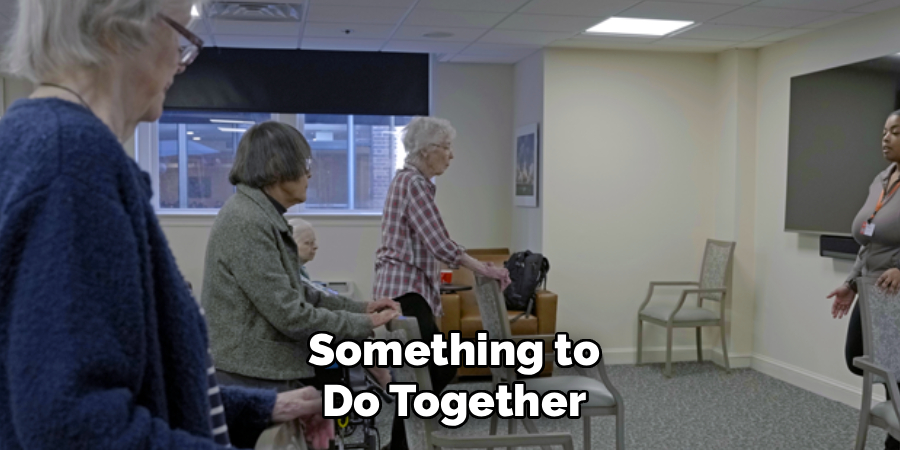
This is why interest-based groups help. A book club, language class, running group, choir, gaming meetup, gardening project, faith community, or local workshop gives people something to do together before asking them to reveal much. That matters. It lowers the pressure.
There is also a practical point here: repeated exposure tends to matter more than first impressions. Seeing the same people weekly creates familiarity, and familiarity can make conversation less effortful. You do not need instant chemistry. You need a setting where connection has a chance to develop over time, almost incidentally.
Step 4: Volunteer in Your Local Community
Volunteering can be useful for reasons that go beyond “keeping busy.” It puts you in contact with other people around a shared task, which is often a more stable basis for connection than vague socializing.
There is something clarifying about working beside others at a food bank, community garden, shelter, library event, or neighborhood program. The focus shifts outward. For a while, the central question is no longer “How am I coming across?” but “What needs to be done?” That change in attention may ease self-consciousness, especially for people who find unstructured social settings draining.
It would be too simple to say volunteering cures loneliness. It does not, at least not automatically. But it can create a sense of usefulness and mutual effort that some people have been missing for a long time. And sometimes that is the beginning of belonging.
Step 5: Limit Mindless Social Media Consumption
Social media is complicated. It can help people stay in touch, especially across distance. It can also leave them feeling strangely worse.
Part of the problem is tempo. Endless scrolling encourages passive comparison without real participation. You see birthdays, dinners, group photos, weddings, inside jokes, and polished fragments of other people’s lives, often at the exact moment you feel least included. Even when you know these posts are selective, your nervous system may not fully care. It still registers absence.
If this sounds familiar, try reducing exposure in concrete ways rather than making grand resolutions. Set time limits. Keep your phone out of reach at night. Remove the app you open reflexively. Better yet, use technology on purpose: send a voice note, arrange coffee, check in directly. Digital contact seems most helpful when it leads toward actual exchange instead of endless observation.

Step 6: Cultivate a Daily Mindfulness Practice
Loneliness can distort attention. The mind starts replaying old disappointments or rehearsing future rejection, and before long, you are not just lonely—you are trapped inside a narrative about being alone forever.
Mindfulness may interrupt that pattern, at least a little. Not by making painful thoughts vanish, but by changing your relationship to them. A short breathing practice, guided meditation, prayerful silence, or a deliberate walk without constant phone checking can help you notice what is happening internally without being pulled all the way under.
Ten minutes might not transform your life. Still, it may create a pause, and that pause matters. People often make better relational decisions when they are less flooded by anxiety. You may find yourself more able to tolerate awkwardness, initiate conversation, or stay present with someone rather than monitoring how you are being perceived.
Step 7: Adopt a Pet or Spend Time with Animals
Animals can provide a kind of companionship that is different from human intimacy but not trivial because it is different. A pet can add routine, touch, movement, and a sense that another living being depends on you. For some people, especially those who live alone, that changes the emotional tone of a day quite a bit.
Of course, adopting a pet is a serious commitment. It involves money, time, housing constraints, and long-term care. It should not be framed as an easy fix. But if pet ownership fits your circumstances, it may offer comfort and structure.
If it does not, there are smaller ways in. Walk a family member’s dog. Visit a friend with pets. Volunteer at an animal rescue if one is available locally. Brief contact with animals may not solve isolation, but it can soften it. Sometimes that is enough to help you keep moving. Following these steps on how to fight lonliness can help you develop a strong support system and find ways to cope with feelings of isolation.

Seek Professional Help When Needed?
There are times when loneliness is not just painful but clinically significant in its effects. If it begins to shape your sleep, appetite, concentration, motivation, or sense of safety in a sustained way, professional support may be worth considering.
This is especially true when loneliness overlaps with depression, severe anxiety, trauma, or persistent social fear. In those cases, “just put yourself out there” is often inadequate advice, and occasionally cruel. A therapist may help you identify patterns that are difficult to see from the inside—avoidance, negative assumptions, unresolved grief, attachment wounds, or old experiences that continue to influence present relationships.
Cognitive Behavioral Therapy (CBT) is often used to examine unhelpful thought patterns, and many people do find it useful. Other approaches may also help, depending on the person. The larger point is simple: asking for help is not evidence that you have failed at coping. It may be evidence that you are taking your life seriously.
Tips for Fighting Loneliness in Different Situations
Context matters. Loneliness after a breakup does not feel quite the same as loneliness in a new city, and neither is identical to the low-grade disconnection that can accompany remote work.
If you work from home, you might experiment with adding social texture to your week: one afternoon in a café, a library, or a shared workspace; a recurring class after work; a regular lunch outside the house. If you have recently moved, treat orientation as a task rather than a mood. Attend local events, say yes more often than feels natural at first, and expect the early phase to be somewhat awkward. That is not failure. It is an entry.
For people navigating divorce, bereavement, or the end of a close relationship, generic social advice may feel thin. In that case, a support group or community organized around that specific experience may be more helpful than broad networking. Sometimes what reduces loneliness is not just company, but being accurately understood.
Daily Habits That Help Reduce Loneliness
Large changes are helpful when they happen. Daily habits, though, are often what keep a person from sinking further.
Leave the house each day if you can. The destination does not have to be impressive. A walk, an errand, sitting on a bench, picking up groceries—it all counts. Brief contact matters too. Say hello to the barista. Ask the cashier how the morning is going. Wave to a neighbor. These are not substitutes for friendship, but they may remind you that social life exists on a continuum, not only at the level of intimate bonds.
Movement can help as well. Exercise seems to improve mood for many people, and just as important, it can restore a sense of momentum when life has become psychologically still. Some people also find it useful to keep a short record of good moments: a kind text, a decent conversation, a laugh they did not expect. Not because gratitude fixes everything. It does not. But attention can be trained, and loneliness often trains it in the opposite direction.
Common Mistakes to Avoid:
One common mistake is relying too heavily on digital contact while quietly avoiding in-person interaction. Texting has its place, but it usually cannot carry the full emotional weight of face-to-face presence.
Another is expecting immediate intimacy. New relationships often grow slowly, and forcing depth too early can make both people pull back. There is also the temptation to interpret one canceled plan or lukewarm interaction as proof that connection is not possible. That conclusion is usually too final. Rejection hurts, yes. It also happens to everyone.
And then there is retreat. After a social disappointment, many people vanish for a while. The impulse makes sense. Even so, repeated withdrawal tends to confirm the very loneliness it is trying to protect you from.
Frequently Asked Questions
Q1: Can You Feel Lonely Even When Surrounded By People?
Yes. This is common, and it often points to emotional loneliness rather than social isolation in the literal sense. You may have coworkers, relatives, classmates, or even a partner around you and still feel disconnected if the relationships lack trust, honesty, or mutual understanding. Presence alone is not always enough. The quality of contact matters.
Q2: How Long Does It Take To Overcome Chronic Loneliness?
There is no reliable timeline. For some people, relief begins once they make one or two meaningful changes. For others, especially if loneliness has been present for years, progress may be slower and less linear. Building a social life usually involves repetition, patience, and a willingness to keep going through some uneven early stages. Months, rather than days, are often the more realistic frame.
Q3: Is Social Media Making My Loneliness Worse?
It could be. For many people, heavy and passive use appears to intensify loneliness by encouraging comparison without connection. If you regularly leave social platforms feeling worse, flatter, or more excluded than before, that reaction is worth taking seriously. Cutting back—or using those platforms mainly to arrange actual conversation or time together—may improve things.
Moving Forward with Purpose
Overcoming loneliness does not require becoming a different personality. It does not demand endless confidence, either. More often, it asks for smaller acts: telling the truth about how you feel, tolerating a little awkwardness, trying again after silence, showing up somewhere regularly enough to become familiar.
That may sound modest. It is. It is also how many real relationships begin.
If you take one step today, let it be a concrete one. Message someone. Join one group. Leave the house with intention. Connection rarely arrives all at once, but it can begin in ways that look almost ordinary at first. Then, gradually, life feels less sealed off. Thanks for reading this guide on how to fight lonliness.

About
Joe Herman is a distinguished figure in the world of personal development, with a decade of expertise creating innovative and sustainable self-improvement frameworks. His professional focus lies in merging cognitive behavioral strategies with modern productivity techniques, fostering habits that are both practical and mentally sustainable. As the lead author of selfvity, Joe Herman delves into the art and science of human potential, inspiring individuals and industry professionals alike to optimize their daily lives.
Education
Stanford University
(Stanford, California) Associate Degree in Behavioral Psychology — Focus on habit formation, cognitive restructuring, and peak performance. Gained hands-on experience with psychological assessment tools and data-driven behavioral modification.
University of Pennsylvania
(Philadelphia, Pennsylvania) Bachelor’s in Positive Psychology and Human Potential (Honors) — Specialized in the science of well-being with a focus on blending psychological theory with actionable growth techniques. Participated in extensive research projects, working with leading wellness consultants to gain real-world insights into human motivation.
Publications and Impact
In selfvity, Joe Herman shares his insights on internal growth processes, mental material, and strategies for efficient lifestyle design. His writing bridges the gap between scientific research and everyday application, making it a must-read for both individuals seeking personal clarity and seasoned professionals looking to refine their mental edge.