There is a particular kind of boredom that goes beyond having an empty afternoon. It shows up when your days are full enough on paper, yet somehow flat in practice. You move from task to task, answer messages, meet obligations, maybe even stay productive, and still end the day with the uneasy sense that nothing really reached you. That feeling can wear a person down. Slowly, then all at once.
For many people, boredom is less about a lack of activity than a lack of aliveness. The routine starts to harden. Monday resembles Tuesday. Even the weekend begins to feel pre-scripted. If that sounds familiar, the good news is that the feeling usually means something worth noticing, not that something is irreparably wrong. In many cases, it may be a signal that your life needs more meaning, more variation, or simply more direct participation from you.
Getting out of that state rarely happens by accident. It tends to require some intention, a little honesty, and a willingness to change things that have become automatic. The aim of this guide is not to sell the fantasy of a dramatic reinvention. It is simpler than that, and probably more useful. Below are seven grounded steps that can help you understand where the boredom is coming from and start making daily life feel more interesting again. In this guide on how to stop being bored with life, we will explore ways to break out of the monotonous routine and find more joy and fulfillment in our daily lives.

Understand What May Be Causing the Boredom
Before trying to fix boredom, it helps to be precise about what it actually is. People often assume boredom means they do not have enough to do. Sometimes that is true. Often, though, the problem runs deeper. A person can be overloaded, overscheduled, and still feel unstimulated. That usually suggests a mismatch between how time is being spent and what the mind or temperament is actually asking for.
In practice, boredom often appears when your days are missing one or more of the following: meaning, challenge, novelty, or connection. You may be completing responsibilities without feeling any attachment to them. You may be competent at everything on your schedule, which sounds ideal until competence turns into mechanical repetition. There is also the quieter issue of value drift. What mattered to you at one point in life may not matter in the same way now, yet many people keep living by old preferences long after they have gone stale.
Burnout can complicate this further. What looks like boredom may, in some cases, be exhaustion wearing a different face. If you have been pushing for too long without much rest, your emotional range may narrow. Things that once felt energizing begin to feel dull, not because they have lost all value, but because you have very little left to meet them with. Predictability has a role too. Most people need some structure. Very few thrive on total sameness. When every hour is mapped, the mind stops paying close attention. Life becomes familiar in the least satisfying way.
Seeing these patterns clearly matters. It shifts the question from “What is wrong with me?” to “What, exactly, has gone flat here?” That is a more workable place to begin.
7 Practical Steps on How to Stop Being Bored With Life
Step 1: Revisit What Actually Matters to You
If life feels empty, the first question is not “How do I make it more exciting?” It is “What still feels real to me?” Interests change. Values shift. A hobby you loved at twenty may now feel like a chore. A career goal that once gave you direction may no longer fit the person you have become. That is not failure. It is ordinary development, though people often resist admitting it.
Set aside a little quiet time and think back to the last few moments when you felt absorbed rather than merely occupied. Not distracted. Absorbed. What were you doing? Who were you with? What kind of attention did the activity require? You may notice a pattern. Perhaps you come alive when making something with your hands. Perhaps you feel most engaged when helping someone solve a problem. Maybe you miss physical effort, or deep reading, or the sense of being useful in a visible way.
Once you identify those themes, treat them as directional cues. Someone who values community may need more shared activity and less solitary scrolling. Someone drawn to creativity may need to stop waiting for a free weekend and instead protect an hour for writing, sketching, cooking, or building. Life gets less dull when your calendar reflects what matters to you now, not what used to matter or what merely looks respectable from the outside.
Step 2: Set Small Daily Goals You Can Actually Look Forward To
When people feel stuck, they often respond with grand plans. New city. New career. New personality, almost. The trouble is that sweeping change can be strangely seductive and totally unsustainable. It asks for a level of energy that boredom, especially boredom mixed with fatigue, does not usually provide.
A smaller approach tends to work better. Choose one concrete thing each day that introduces a little interest or momentum. It does not need to be impressive. Make one unfamiliar recipe. Read ten pages of something that genuinely holds your attention. Walk a different route home. Spend twenty minutes learning how to do something you have avoided because you assumed you would be bad at it.

These small goals matter because they interrupt passivity. They also create a modest but useful sense of anticipation. You stop moving through the day as if nothing in it belongs to you. That shift is easy to underestimate. People often do not need an entirely new life first. They need one part of the day that feels chosen rather than inherited.
Step 3: Interrupt the Routine Before It Hardens Further
Routine has obvious benefits. It reduces decision fatigue. It helps people function. Still, once a routine becomes too fixed, attention starts to thin out. You stop seeing your surroundings. Meals blur together. Commutes disappear from memory. Even enjoyable habits can become inert if they happen in exactly the same way, at exactly the same time, for too long.
This is why deliberate disruption can help. Not chaos. Just disruption. If you always exercise in the evening, try going in the morning once or twice a week and notice whether your day feels different. If lunch usually happens at your desk, take it outside. If your apartment feels visually dead to you, move the chair, shift the lamp, change the room enough that your eyes have to register it again.
Tiny changes count. Use your non-dominant hand for a familiar task. Listen to music you would normally dismiss. Visit a different grocery store. Take the long way home and leave the headphones out for part of the walk. None of this is dramatic. That is partly the point. You do not need to abandon your life to become re-engaged with it. Sometimes you need to make it slightly less automatic.
Step 4: Seek Out Better Conversation, Not Just More Interaction
A surprising amount of boredom is social in nature. You can be around people all day and still feel undernourished. Casual contact has its place, but it does not always satisfy the need to be known, challenged, amused, or mentally stirred. If your interactions have become mostly transactional, boredom may be telling you less about your schedule and more about the quality of your connections.
Start with the people already in your orbit. Reach out to the friend you keep meaning to text. Suggest coffee to a colleague you genuinely enjoy talking with. Ask better questions. Stay a little longer in the conversation instead of keeping everything at the level of updates and logistics.
If your current circle feels static, it may help to place yourself in settings where something more organic can happen. A class, volunteer role, reading group, neighborhood event, rec league, workshop. The point is not to collect acquaintances. It is to enter spaces where shared attention makes better conversation possible. New people can expose you to new interests, yes, but they can also return you to neglected parts of yourself. That is often the more important change.
Step 5: Learn Something That Makes You Slightly Uncomfortable
There is a reason boredom and overfamiliarity tend to travel together. When everything is known in advance, very little is asked of you. Learning cuts against that. It reintroduces uncertainty, effort, and friction. At first, that can feel inconvenient. It can also feel strangely energizing.
Choose a skill that genuinely pulls at your curiosity. Not one you think would sound impressive. One you actually want to spend time with. Maybe it is a language, maybe it is guitar, maybe it is basic coding, maybe it is learning how to cook one difficult dish well, instead of cycling through the same five meals. The specific skill matters less than the fact that it asks you to become a beginner again.

Beginners are forced into the present. They cannot coast. That is part of the value. The early awkwardness, irritating as it can be, often signals that your attention is fully engaged. Give the skill a small, regular place in your week. Twenty minutes a day is enough to begin. Progress may be slow. That is fine. The point is not quick mastery. It is contact with growth, and with the modest satisfaction of becoming a little less clueless than you were last Tuesday.
Step 6: Reduce the Kind of Screen Time That Leaves You Emptier
People often use their phones as a remedy for boredom, but the effect can be misleading. Endless scrolling occupies attention without really satisfying it. After a while, you may feel both overstimulated and underfed, which is an unpleasant combination. Time passes. Very little remains.
This does not mean all digital activity is harmful or that every spare minute should become productive. That line of thinking can get puritanical fast. Still, it is worth noticing the difference between screen use that serves you and screen use that merely anesthetizes you. Watching one carefully chosen film is not the same as drifting through short clips for ninety minutes and wondering where the evening went.
Try setting a few limits that are specific enough to follow. Keep your phone out of reach for the first part of the morning. Remove the apps you open reflexively. Charge the device in another room at night. Leave one hour in the evening unfilled by feeds, notifications, or casual checking. What emerges in that space may be awkward at first. You may feel restless. Good. That restlessness is often the threshold. On the other side of it are activities that ask more from you and give more back.
Step 7: Practice Paying Closer Attention to Ordinary Life
Sometimes boredom has less to do with the life itself than with the quality of attention being brought to it. If your mind is constantly racing ahead or replaying old conversations, even decent moments can pass by half-seen. The day becomes generic. You remember that you lived it, but not quite how.
Mindfulness, stripped of the jargon that often surrounds it, is basically the practice of noticing what is here. The taste of coffee rather than the idea of coffee. The feel of cold air when you step outside. The particular noise of your street in the morning. These are small things. Yet when people say life feels flat, it is often because they have stopped registering small things at all.
A gratitude practice can reinforce this, provided it stays concrete and does not turn into forced optimism. Do not write “I am grateful for everything” and call it a day. Be specific. Maybe the bus came on time when you were running late. Maybe someone made you laugh harder than expected. Maybe dinner was simple but good, and you actually tasted it. Writing down a few details each night may help retrain attention. Not magically. Not overnight. But enough, perhaps, to make daily life feel less blurred and more inhabited. Following these steps on how to stop being bored with life can help bring a sense of purpose and fulfillment to your everyday routine.
Avoid a Few Common Missteps
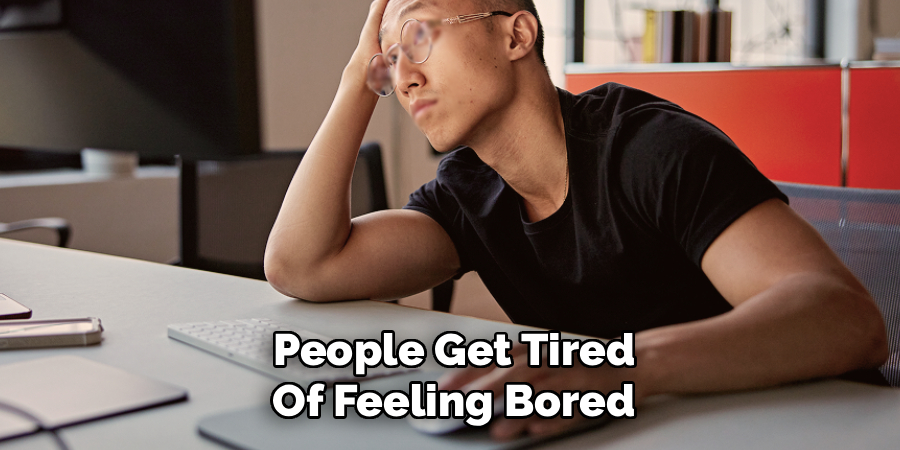
When people get tired of feeling bored, they sometimes overcorrect. They book an expensive trip that they cannot really afford. They chase novelty for its own sake. They make an impulsive purchase because the anticipation feels like relief. This can work briefly. Then the stimulus fades, and the underlying problem returns, often sharper than before.
Comparison is another trap. Social media is particularly good at making ordinary life feel inadequate. Other people’s weekends appear vivid, effortless, full of momentum. Your own, by contrast, may seem uneventful. But comparison distorts the standard. It encourages you to judge your lived experience against other people’s edited fragments. That almost always ends badly. A more durable answer to boredom usually comes from building a life that fits you better, not from trying to mimic whatever looks exciting on a screen.
A Realistic Example of Change
Take the example of someone working a stable office job, spending her days in spreadsheets and her evenings in the same tired routine. She is not in crisis exactly. She is just dulled by repetition. Instead of making a dramatic exit from her career, she changes two things. On Thursday nights, she signs up for a pottery class. During her commute, she stops defaulting to the usual background noise and starts listening to history podcasts that actually hold her attention.
Neither change is enormous. That is what makes the example useful. Over time, though, the effects begin to accumulate. Working with clay gives her a tactile form of concentration that her job does not provide. The drive to work feels less deadening. A few months later, weekends look different, too. She begins taking the class more seriously, meets people through it, and eventually sells a few pieces at a local market. The point is not that everyone should start making ceramics. It is those small, sustained shifts that can alter the emotional texture of a life more than dramatic gestures sometimes do.
Build a Life That Gives Boredom Less Room to Grow
There is no permanent cure for boredom because boredom is not a one-time glitch. It tends to return whenever life becomes too narrow, too repetitive, too detached from what matters. So the real task is not to eliminate boredom once and for all. It is to build a way of living that makes long stretches of deadness less likely.
That may mean creating a weekly rhythm with more range in it: demanding work, yes, but also rest that actually restores you, and some space for curiosity that is not immediately useful. Keep a list of places you want to go, books you might actually read, classes that interest you, odd little projects you keep postponing. Then, when free time appears, you are less likely to default to whatever is easiest and least memorable.
This is not about engineering a perfect life. That would become boring in its own way. It is about keeping yourself in contact with interest, with effort, with surprise, with other people, and with your own attention. Boredom shrinks when those things expand.

Reignite Your Interest in Daily Life
If you have been bored with life for a while, it may help to stop treating the feeling as a character flaw. More often, it is information. It may be telling you that your days have become too repetitive, too passive, too disconnected from what matters to you. That is uncomfortable, but it is also workable.
You do not need a windfall, a dramatic reinvention, or some cinematic turning point. More likely, you need a series of small decisions made with more attention than usual. Revisit your values. Change one part of the routine. Learn something awkward. Talk to someone worth talking to. Put the phone down long enough to hear your own mind again.
Start there. Then keep going. If you want a practical next step, track your habits and mood for the next month and see what patterns emerge. The results may tell you more than vague reflection ever will. In many cases, a more engaging life is built that way: not all at once, but on purpose. Thanks for reading this guide on how to stop being bored with life.

About
Joe Herman is a distinguished figure in the world of personal development, with a decade of expertise creating innovative and sustainable self-improvement frameworks. His professional focus lies in merging cognitive behavioral strategies with modern productivity techniques, fostering habits that are both practical and mentally sustainable. As the lead author of selfvity, Joe Herman delves into the art and science of human potential, inspiring individuals and industry professionals alike to optimize their daily lives.
Education
Stanford University
(Stanford, California) Associate Degree in Behavioral Psychology — Focus on habit formation, cognitive restructuring, and peak performance. Gained hands-on experience with psychological assessment tools and data-driven behavioral modification.
University of Pennsylvania
(Philadelphia, Pennsylvania) Bachelor’s in Positive Psychology and Human Potential (Honors) — Specialized in the science of well-being with a focus on blending psychological theory with actionable growth techniques. Participated in extensive research projects, working with leading wellness consultants to gain real-world insights into human motivation.
Publications and Impact
In selfvity, Joe Herman shares his insights on internal growth processes, mental material, and strategies for efficient lifestyle design. His writing bridges the gap between scientific research and everyday application, making it a must-read for both individuals seeking personal clarity and seasoned professionals looking to refine their mental edge.